
Ecology-Friendly Lighting Design
Lighting Designs That Don't Cost the Earth
Exterior lighting must balance the needs of people using a site with the protection of wildlife, habitats and the wider night-time environment. Light spill, glare, upward light and unnecessary operation should all be considered when developing lighting for an environmentally sensitive location.
Lumenata provides ecology-friendly lighting design and lighting impact assessments for developments across the UK. We can assess our own proposals or independently review lighting schemes produced by others, helping project teams respond to ecological, planning and operational requirements.
Ecology-Friendly Lighting Designed to Protect the Night-Time Environment
Exterior lighting can improve safety, accessibility and the operation of a development, but poorly controlled light may affect wildlife, neighbouring properties and the character of the night-time environment.
Lumenata develops ecology-friendly lighting schemes that provide appropriate illumination while limiting unnecessary light. We consider the location, surrounding habitats, ecological constraints, planning requirements and operating needs of each development before preparing the design.
What an Ecology-Friendly Lighting Scheme Should Deliver
A considered ecology-friendly lighting design should:
Provide appropriate illumination only where it is required
Protect identified habitats, bat roosts and wildlife corridors
Maintain dark areas and ecological buffer zones where necessary
Limit light spill beyond the intended area
Reduce glare and direct views of bright light sources
Minimise unnecessary upward light and its contribution to sky glow
Use suitable light sources, optical control and mounting positions
Avoid excessive lighting levels and unnecessary illumination
Use controls, dimming and curfews to limit operating hours
Respond to ecological surveys, planning conditions and site-specific requirements
Balance environmental protection with safety, accessibility and operational needs
Provide a maintainable and energy-efficient long-term solution
The appropriate response will depend on the sensitivity of the location and the species or habitats identified. We therefore develop each scheme around the available ecological information rather than applying a standard lighting solution to every site.
Sites and Developments We Can Support
Our ecology-friendly lighting design services can support:
Residential and mixed-use developments
Holiday parks, lodges and visitor accommodation
Hotels, leisure facilities and hospitality developments
Schools, colleges and university campuses
Commercial, retail and industrial developments
Sports pitches, courts and leisure facilities
Car parks, access roads and service areas
Footpaths, cycle routes and public spaces
Rural and edge-of-settlement developments
Projects close to woodland, hedgerows or watercourses
Sites containing bat roosts or established commuting routes
Developments within dark-sky and environmentally sensitive locations
Every location presents a different combination of environmental and operational considerations. A rural holiday park, for example, will require a different approach from an urban commercial development, university campus or sports facility. We assess the intended use, operating hours and surrounding environment before developing the lighting strategy.
Lighting Design for Bats and Other Nocturnal Wildlife
Artificial light can influence the behaviour of bats and other nocturnal species by affecting roost access, commuting routes, foraging areas and the availability of prey. Different species may respond differently, making early coordination with the project ecologist particularly important.
Where bats or other sensitive species are identified, the lighting design can respond to the ecological assessment and recommended mitigation measures. This may involve maintaining dark corridors, repositioning luminaires, reducing mounting heights, limiting output, controlling the direction of light or avoiding illumination during sensitive periods.
The objective is to provide the necessary lighting for people while preserving darkness and habitat connectivity where these are important to local wildlife.
Protecting Dark Corridors and Sensitive Habitats
Hedgerows, woodland edges, tree lines and watercourses can provide important routes and habitats for wildlife. Lighting these features unnecessarily may reduce their ecological value or interrupt movement across a site.
We use the ecological information available for the project to identify areas where darkness should be retained. Lighting layouts can then be developed around these constraints, with appropriate offsets, orientations and control measures used to protect sensitive boundaries.
Illuminance calculations and light-spill drawings can demonstrate how the proposed scheme relates to identified habitats and ecological zones.
Controlling Light Spill, Glare and Sky Glow
Obtrusive light can extend beyond the area that needs to be illuminated, create uncomfortable glare, affect neighbouring properties and contribute to the brightening of the night sky.
Careful luminaire selection is essential. Suitable optical control, shielding, mounting height and aiming allow light to be directed towards the intended task while limiting illumination elsewhere. A well-controlled lower-output luminaire may be more effective than a powerful fitting positioned or aimed incorrectly.
We also consider reflected light from paving, façades and other surfaces, as this can contribute to the wider environmental effect of an installation.
Light Source and Colour Considerations
The ecological effect of a lighting installation is influenced by more than its measured light level. The spectral characteristics of the light source, including the amount of shorter-wavelength light, may also be relevant to wildlife.
Where appropriate, we can consider warmer light sources and products with controlled spectral output, taking account of the recommendations provided by the project ecologist and the requirements of the task.
Colour temperature alone does not determine whether a scheme is ecology-friendly. Light distribution, intensity, operating time and the location of luminaires must all be considered together.
Lighting Controls, Dimming and Curfews
One of the most effective ways to reduce the environmental impact of lighting is to ensure that it does not operate unnecessarily.
Depending on the development, controls may include time scheduling, dimming, presence detection, zoning and defined lighting curfews. Different operating settings can be provided for normal use, periods of reduced activity, cleaning, maintenance and overnight security.
Controls should be appropriate for the way the site will be managed. We develop strategies that support practical operation while reducing energy consumption and unnecessary night-time illumination.
Lighting Impact Assessments and Planning Support
Exterior lighting is frequently considered as part of a planning application, particularly where a development is close to homes, protected habitats or a sensitive rural landscape.
Lumenata can prepare lighting impact assessments and supporting technical information for proposed developments. Depending on the project, this may include a review of the site context, environmental zone, proposed equipment, lighting calculations, light-spill information, control arrangements and mitigation measures.
We can assess lighting schemes developed by Lumenata or independently review proposals produced by others. Our findings can help clients and design teams understand potential concerns and identify proportionate improvements before submission.
Working with Ecologists and the Wider Project Team
Ecology-sensitive lighting is most effective when the lighting designer and ecologist coordinate their work from an early stage. The ecological assessment identifies sensitive species, habitats and routes, while the lighting design develops practical measures that respond to those findings.
Lumenata can work with ecologists, architects, landscape architects, planning consultants, developers, engineers and contractors throughout the design process. Early collaboration can reduce conflicts between lighting, landscaping, access, security and other project requirements.
Where the ecological recommendations or site layout change, the lighting strategy can be reviewed and updated so that the submitted information remains coordinated.
Energy-Efficient and Proportionate Exterior Lighting
Ecology-friendly lighting and energy-efficient lighting share an important principle: unnecessary light should be avoided.
We begin by considering whether lighting is required, where it is needed and when it must operate. Suitable LED equipment, accurate optical control and an appropriate control strategy can then provide the necessary performance without excessive output or energy consumption.
This proportionate approach can reduce environmental effects, operating costs and maintenance requirements while still supporting safe and practical use of the development.
Our Ecology-Friendly Lighting Design Service
Depending on the project, our services can include:
Initial consultation and review of the development proposals
Site surveys and assessment of existing lighting
Review of ecological reports and identified constraints
Ecology-sensitive lighting strategies
Concept and detailed exterior lighting design
Luminaire selection, positioning and specification
Lighting calculations and light-spill assessments
Consideration of glare, upward light and sky glow
Lighting-control, dimming and curfew strategies
Lighting impact assessments
Technical information to support planning applications
Independent review of third-party lighting proposals
Coordination with ecologists and the wider design team
Product sourcing and supply
Technical support during installation and commissioning
Our involvement can be tailored to suit an individual planning condition, an independent lighting review or the complete design and supply of an exterior lighting scheme.
Why Choose Lumenata?
Lumenata combines specialist lighting knowledge with practical experience of planning and ecology-sensitive developments. We understand that a successful design must provide appropriate lighting for people while responding carefully to wildlife, neighbouring properties and the wider night-time environment.
Our experience across residential, hospitality, holiday park, education, retail, industrial and sports projects enables us to develop solutions suited to a wide range of sites. From initial assessment and technical design to planning support and installation advice, we work collaboratively to create controlled, efficient and environmentally considerate lighting schemes.
Proven Track Record for Ecology-Sensitive Lighting Design Projects
Lumenata has developed a strong track record in ecology-sensitive lighting design, supporting planning submissions for developments across the UK. Our experience enables us to identify potential lighting concerns early and develop practical mitigation measures in coordination with the wider project team.
Our designs use the latest lighting technology to help to minimise the impact on ecology.
Please feel free to browse our completed lighting design projects below and contact us if you feel we can help you.

Weymouth Bay Holiday Park
Sector: Holiday Park
Location: Dorset, England
Date: June 2025
Status: Planning Decision Pending

Bryn Gwynant Youth Hostel
Sector: Hospitality
Location: Gwynedd, Wales
Date: May 2025
Status: Planning Decision Pending

Rowston Holiday Park
Sector: Holiday Park
Location: Pembrokeshire, Wales
Date: May 2025
Status: Planning Permission Granted

Lydstep Beach Holiday Park
Sector: Holiday Park
Location: Pembrokeshire, Wales
Date: March 2025
Status: Planning Permission Granted

Roan Head Holiday Park
Sector: Holiday Park
Location: Cumbria, England
Date: March 2025
Status: Planning Decision Pending

MFG Bredbury
Sector: Retail
Location: Cheshire, England
Date: November 2024
Status: Planning Decision Pending

Eastway
Sector: Industrial
Location: Lancashire, England
Date: November 2024
Status: Planning Decision Pending

Craig Tara
Sector: Holiday Park
Location: Ayrshire, Scotland
Date: September 2024
Status: Planning Permission Granted

Dinsdale Drive
Sector: Education
Location: Greater Manchester, England
Date: July 2024
Status: Planning Decision Pending
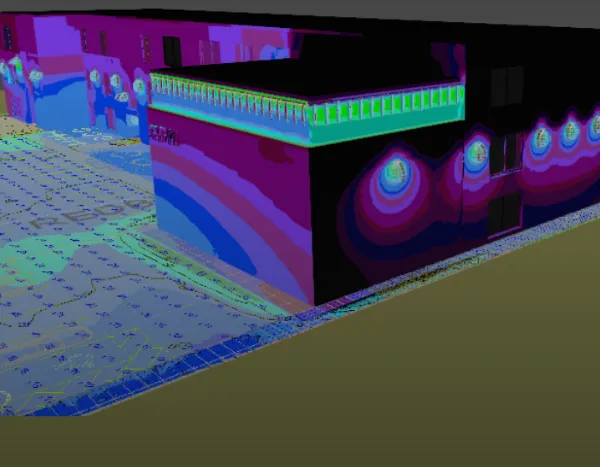
Redby Street
Sector: Education
Location: Greater Manchester, England
Date: May 2024
Status: Planning Permission Granted

Sharmer Farm
Sector: Industrial
Location: Shropshire, England
Date: April 2024
Status: Planning Permission Granted

Carmarthen Road
Sector: Retail
Location: West Glamorgan, Wales
Date: June 2023
Status: Planning Permission Granted

Perran Sands Holiday Park
Sector: Holiday Park
Location: Cornwall, England
Date: April 2023
Status: Planning Permission Granted

Trefloyne Manor
Sector: Hospitality
Location: Pembrokeshire, Wales
Date: February 2023
Status: Planning Decision Pending

Wynd Hill Lodges
Sector: Holiday Park
Location: Pembrokeshire, Wales
Date: September 2022
Status: Planning Permission Granted

Seven Springs Holiday Park
Sector: Holiday Park
Location: Ceredigion, Wales
Date: September 2022
Status: Planning Permission Granted

Bluestone Resort
Sector: Holiday Park
Location: Pembrokeshire, Wales
Date: February 2022
Status: Planning Permission Granted

Lancaster University
Sector: Education
Location: Lancashire, England
Date: January 2021
Status: Planning Permission Granted
These projects demonstrate Lumenata’s ability to deliver sensitive, ecology-friendly lighting solutions that balance environmental protection, planning compliance and technical excellence at every scale.
Partner with Lumenata on Your Ecology-Friendly Lighting Design Project
Whether you are working on a new development, upgrading existing exterior lighting or addressing ecological and planning requirements on a sensitive site, Lumenata can help you deliver an ecology-friendly lighting scheme that protects wildlife, reduces light pollution and responds to relevant ecological, planning and technical requirements.

Get In Touch

"Light creates ambience and the feel of a place, as well as the expression of structure"
- Le Corbusier


Copyright 2026 Lumenata Design Services Limited. All rights reserved