
Wellbeing Lighting Design
Lighting Design That Supports Wellbeing, Comfort and Emotional Balance
At Lumenata, we believe lighting has the power to do far more than illuminate — it can influence mood, support comfort and enhance the overall experience of a space.
We apply principles of human-centric lighting design, combining research in circadian rhythm, colour temperature, and visual comfort to develop environments that promote relaxation, focus, and emotional balance.
Designing Light That Cares
Considered Lighting for Wellbeing, Healthcare and Therapeutic Environments
Lighting can influence how comfortable, welcoming and easy to navigate a space feels. In healthcare, hospice, care and therapeutic environments, it must support the different needs of patients, residents, visitors and staff without creating unnecessary glare, contrast or visual discomfort.
Lumenata provides considered wellbeing lighting design for specialist environments across the UK. We develop each scheme around the activities taking place, the people using the space and the atmosphere the client wants to create.
Our approach combines technical lighting performance with careful control, appropriate colour quality and sensitivity to individual needs. The result is an adaptable environment designed to support comfort, dignity and everyday use.
Comfortable, Supportive and Adaptable Lighting
A successful wellbeing lighting design should:
• Provide comfortable and appropriate illumination for each activity
• Control glare, reflections and excessive brightness
• Avoid sudden or uncomfortable changes in light level
• Support clear visibility and safe movement
• Provide suitable lighting for patients, residents, visitors and staff
• Make spaces feel calm, welcoming and less institutional
• Offer personal control where appropriate
• Respond to different sensory and accessibility needs
• Complement available daylight and the natural daily cycle
• Use efficient, reliable and maintainable lighting equipment
• Allow spaces to adapt to different activities and times of day
Wellbeing Environments We Can Support
Our wellbeing lighting-design services can be adapted for:
• Hospices and palliative-care environments
• Healthcare and treatment facilities
• Care homes and supported-living accommodation
• Wellbeing lounges and family spaces
• Therapy and consultation rooms
• Sensory rooms and respite centres
• Mental-health and calming environments
• Rehabilitation facilities
• Community and social-care buildings
• Staff rest and working areas
• Reception and waiting spaces
• Bedrooms, circulation areas and shared lounges
Every environment has different requirements. A treatment room may need clear, task-appropriate illumination, while a lounge or bedroom may require softer lighting and greater personal control.
We consider the needs of the occupants, staff responsibilities, daily routines, accessibility, sensory sensitivity and the practical operation of the facility before developing the design.
Daylight, Daily Patterns and Tunable Lighting
Access to daylight and appropriate patterns of light and darkness are important considerations when designing spaces that are occupied throughout the day and night.
Where suitable, tunable-white lighting can allow the appearance and intensity of the artificial light to change at different times. Brighter, cooler conditions may support daytime activities, while warmer and lower lighting can create a calmer atmosphere during the evening.
These systems require careful design and programming. Simply installing colour-changing or tunable equipment does not automatically create an effective wellbeing scheme. Controls, timing, intensity, glare and the needs of the people using the space must all be considered together.
Visual Comfort, Accessibility and Safe Movement
Good visibility is essential in healthcare and care environments, but higher brightness does not always mean better lighting. Excessive glare, harsh reflections and strong contrasts can make a space uncomfortable and more difficult to navigate.
We consider light levels, uniformity, colour rendering, surface reflectance and the transition between adjoining spaces. Particular attention can be given to corridors, steps, entrances, bathrooms and other areas where clear visibility supports safe movement.
Lighting can also help identify important destinations and provide visual orientation. Carefully illuminated entrances, reception points, signs and circulation routes can make unfamiliar environments easier to understand.
Personal Control and Sensory Needs
People can respond differently to brightness, colour and changing light. This is particularly important in sensory, respite and therapeutic environments, where a fixed lighting condition may not be appropriate for every occupant.
Dimming, scene selection and controlled coloured lighting can allow staff or occupants to adapt a room for different activities and preferences. The controls should be intuitive and should prevent distracting or unsuitable settings from being selected accidentally.
We work with the client and wider professional team to understand how each space will be used and determine where personalisation can provide a practical benefit.
Lighting for Patients, Visitors and Staff
Wellbeing environments must support the people receiving care as well as the staff delivering it. These groups may occupy the same space but have different visual and practical requirements.
Patients and visitors may benefit from calm, welcoming surroundings with comfortable illumination and simple controls. Staff require sufficient light to move safely, complete tasks, read information and observe their surroundings accurately.
A considered lighting design balances these requirements rather than prioritising one group at the expense of another. Different scenes or control zones can help the same space respond to clinical, social, resting and cleaning activities.
Creating Calm and Welcoming Interiors
Healthcare and care environments do not have to feel clinical or institutional. Layered lighting can help create a warmer and more familiar atmosphere while maintaining the visibility required for everyday activities.
Soft ambient illumination can be combined with focused task lighting, decorative fittings and carefully controlled accent lighting. This approach gives spaces depth and visual interest while avoiding excessive brightness.
The lighting should complement the architecture, interior finishes and purpose of the room. In lounges, family areas and bedrooms, a more domestic character can help create a comfortable and reassuring environment.
Energy-Efficient and Maintainable Wellbeing Lighting
Healthcare, hospice and care facilities often operate for extended hours, making energy consumption, reliability and maintenance important considerations.
Modern LED luminaires and suitable controls can reduce unnecessary energy use while providing flexible lighting conditions. Control options may include dimming, zoning, occupancy detection, scheduled operation and daylight response.
We also consider product life, maintenance access and the availability of replacement components. This helps clients achieve a solution that remains practical and cost-effective throughout the life of the installation.
Our Wellbeing Lighting Design Service
Depending on the project, our support can include:
• Initial consultation and assessment of the environment
• Review of user, staff and operational requirements
• Lighting concepts and creative direction
• Ambient, task, decorative and orientation lighting
• Luminaire selection and specification
• Lighting calculations and layout development
• Glare and visual-comfort considerations
• Colour-rendering and colour-temperature recommendations
• Tunable-white and sensory-lighting strategies
• Lighting controls and scene setting
• Emergency-lighting considerations
• Coordination with architects, interior designers and specialist consultants
• Product sourcing and supply
• Technical support during installation and commissioning
Why Choose Lumenata?
Lumenata combines creative lighting design with practical technical experience. We work collaboratively with healthcare providers, care organisations, architects, interior designers, consultants and contractors to develop schemes appropriate to the people, setting, budget and operational requirements.
Our experience across wellbeing, healthcare, public-sector and sensory environments allows us to consider both the emotional character of a space and its practical responsibilities. Our goal is to create lighting that is comfortable, adaptable, efficient and appropriate for everyone who uses the environment.
Examples of Our Wellbeing Lighting Design Experience
Lumenata has delivered successful wellbeing lighting design and supply for a range of healthcare, hospice and therapeutic projects across the UK, including:
St John’s Hospice, Wirral
Lumenata designed and supplied the lighting for a new Wellbeing Lounge, featuring artificial skylights that simulate natural daylight. This innovative feature creates a sense of openness and serenity, helping patients and families feel connected to the outside world even indoors.
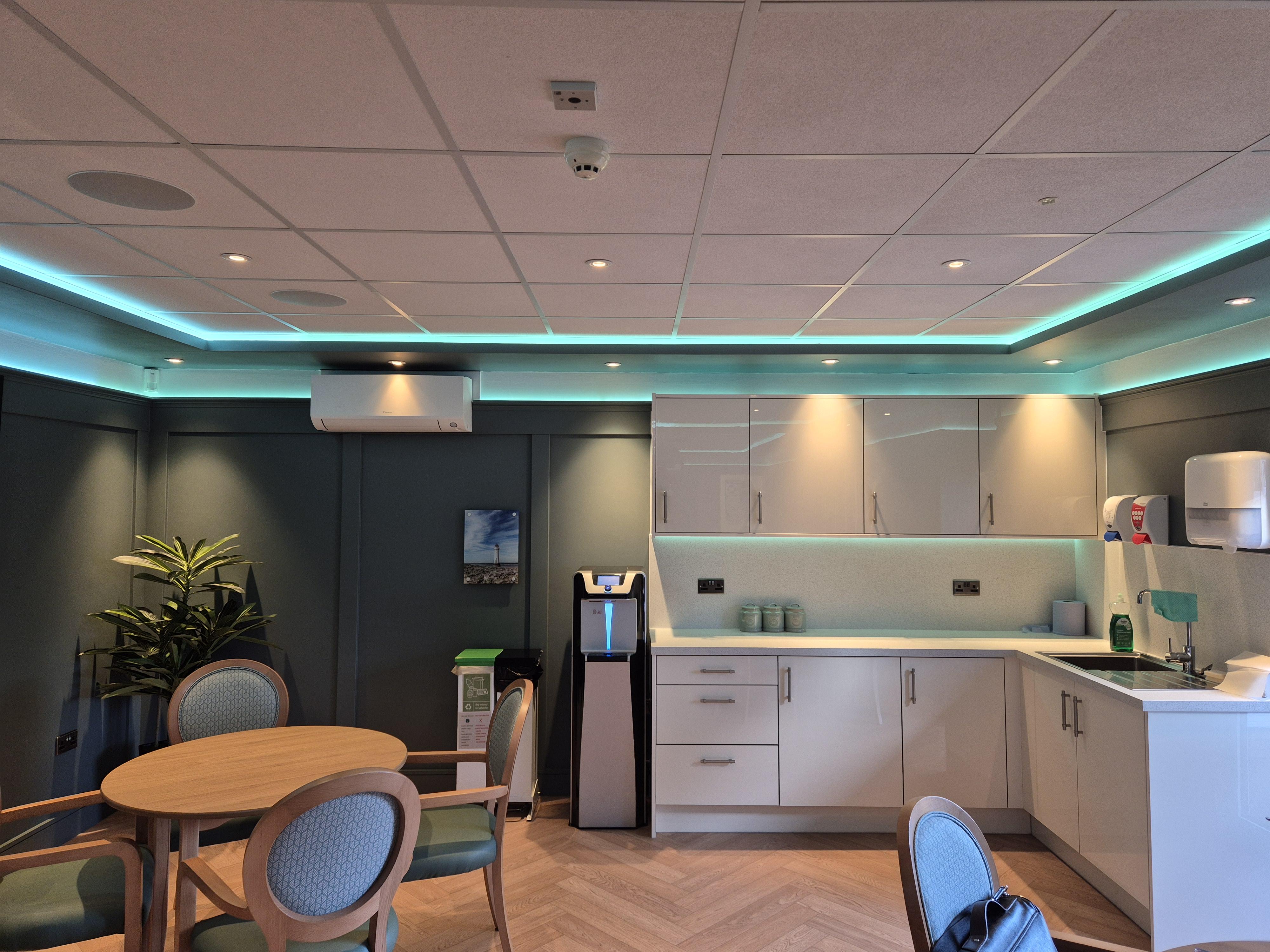
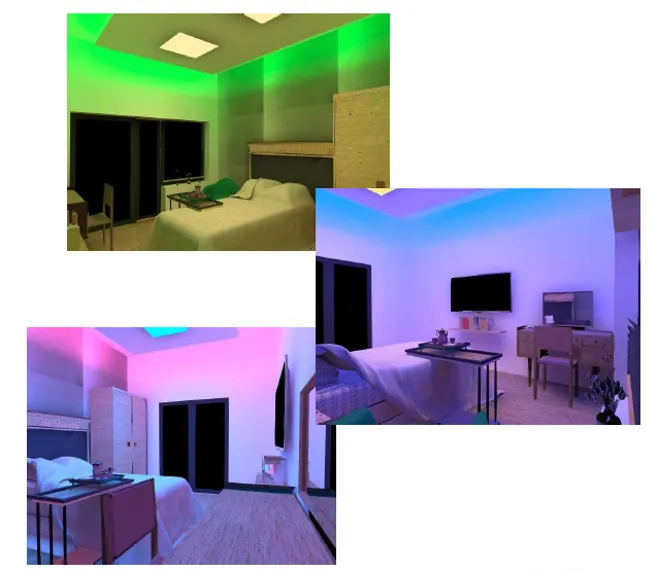
Autism Respite Centre, Blackpool
Lumenata developed a sensory-responsive lighting design that allows the environment to adapt to residents’ emotional and sensory needs. The system enables staff to change the mood of each space through controlled coloured lighting, helping to calm, engage, or energise individuals as required.
East Cheshire Hospice, Macclesfield
Our team implemented human-centric lighting throughout the facility to support patient comfort and staff wellbeing. Tunable-white lighting systems change throughout the day to provide brighter daytime conditions and a warmer, calmer atmosphere during the evening.
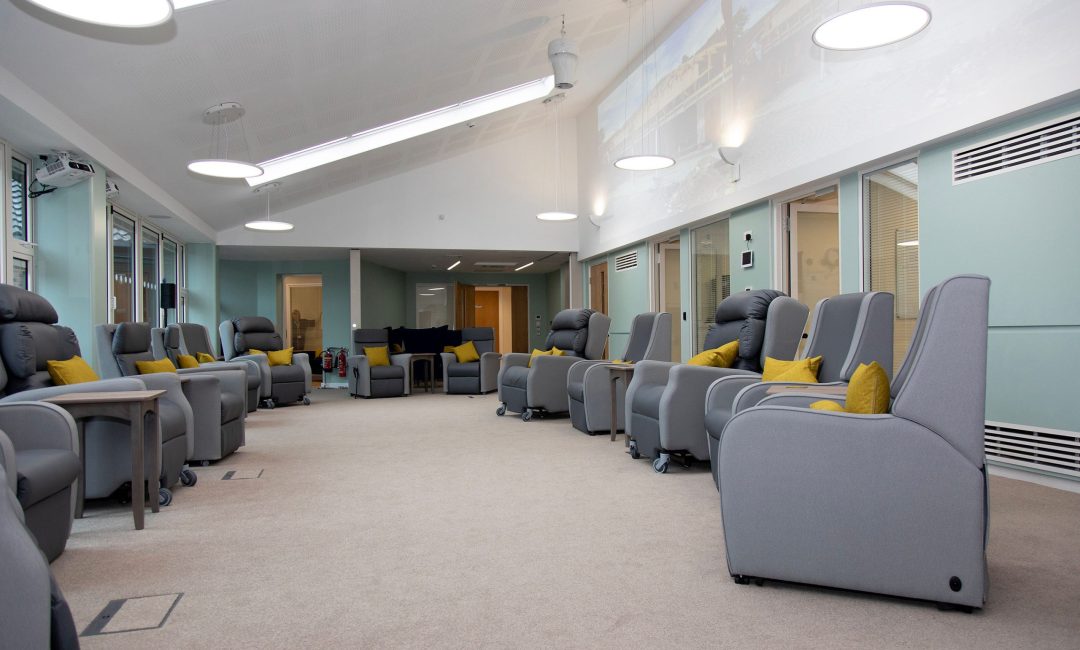
Each project demonstrates how carefully considered lighting can support comfort, adaptability and quality of experience, combining technology with compassion and design excellence.
Partner with Lumenata on Your Wellbeing Lighting Design Project
Whether you’re designing a hospice, healthcare facility or therapeutic space, Lumenata can help you create environments where light supports comfort, relaxation and human connection.
Contact us to discuss how our wellbeing and healthcare lighting-design services can create a more comfortable, adaptable and supportive environment for patients, residents, visitors and staff.
Get In Touch

"Light creates ambience and the feel of a place, as well as the expression of structure"
- Le Corbusier


Copyright 2026 Lumenata Design Services Limited. All rights reserved