
Public Sector Lighting Design
Lighting Design That Supports Safety, Accessibility and Community Use
Public sector lighting projects require solutions that are efficient, reliable and responsive to the needs of both people and place. Lumenata understands the varied requirements of working with councils, educational institutions, healthcare providers and other public bodies, developing lighting schemes that support functionality, safety, accessibility and long-term community value.
Our approach combines creative lighting design with technical coordination and careful consideration of planning, environmental, energy-efficiency and operational requirements. Whether the objective is to refurbish a public building, improve an educational environment or create more welcoming civic and community spaces, we focus on performance, durability and the experience of the people using them.
Public Sector Lighting Designed Around People, Services and Long-Term Value
Public buildings and community spaces must serve a wide range of people, often across long operating hours and within carefully managed budgets. Their lighting should support safe movement, accessibility, effective service delivery and a welcoming experience while remaining efficient and practical to maintain.
Lumenata provides considered public sector lighting design for civic buildings, educational environments, healthcare facilities, cultural venues and external public spaces. We develop each scheme around the activities taking place, the people using the environment and the operational requirements of the organisation responsible for it.
What an Effective Public Sector Lighting Scheme Should Deliver
A successful public sector lighting design should:
Provide appropriate illumination for the activities taking place
Support safe movement, orientation and clear wayfinding
Create comfortable and welcoming environments for staff, visitors and service users
Consider accessibility and the varied visual needs of different users
Limit uncomfortable glare and excessive contrast
Support the architectural character and purpose of the building
Use efficient LED technology and suitable lighting controls
Respond to daylight, occupancy levels and operating hours
Provide flexibility for different activities and patterns of use
Reduce unnecessary energy consumption and long-term maintenance demands
Coordinate effectively with emergency lighting and other building services
Consider planning, ecological and obtrusive-light requirements where relevant
Provide a durable and maintainable solution appropriate to the available budget
Each public environment has different priorities. A classroom, museum gallery, hospital entrance and external civic space will require different lighting conditions. We consider each area individually while maintaining a coordinated approach across the wider building or development.
Public Buildings and Environments We Can Support
Our public sector lighting design services can be adapted for:
Council offices and civic buildings
Schools, academies, colleges and universities
Healthcare buildings and community health facilities
Museums, galleries, libraries and cultural venues
Community centres and multi-use buildings
Emergency-service and operational facilities
Public reception and customer-service areas
Sports halls, leisure centres and recreation facilities
Car parks, access roads and pedestrian routes
Public squares, parks and external community spaces
Building entrances, façades and surrounding landscapes
Public-sector refurbishment and LED-upgrade projects
Our involvement can range from reviewing an existing installation to providing a complete lighting design and product-supply service for a new development or major refurbishment.
Lighting for Schools and Educational Environments
Educational buildings contain a wide variety of spaces, including classrooms, laboratories, libraries, sports halls, circulation areas, dining facilities and external routes. Each requires lighting suited to the tasks taking place and the age and needs of the people using it.
We consider visual comfort, glare, colour quality, daylight and the position of screens and teaching equipment when developing classroom lighting. Suitable illumination should support reading, writing, demonstrations and digital learning without creating distracting reflections or excessive brightness.
Controls can respond to occupancy and available daylight, helping schools manage energy use while retaining straightforward operation for teaching and facilities staff.
Lighting for Healthcare and Community Care Environments
Healthcare environments require lighting that supports staff activities while creating clear, reassuring and accessible spaces for patients and visitors. Entrances, waiting areas, circulation routes, treatment spaces and external approaches can each present different functional and emotional requirements.
We consider visibility, glare, colour quality, wayfinding and the transition between areas when developing the design. Entrances and reception spaces should be easy to identify, while circulation routes should support confident movement throughout the building.
Where specialist clinical requirements apply, we coordinate the general and architectural lighting with the relevant healthcare guidance, technical consultants and project stakeholders.
Civic, Community and Cultural Buildings
Civic and community buildings frequently support several activities within the same environment. Council chambers, meeting rooms, libraries, community halls and public reception areas may need to accommodate everyday services, presentations, public meetings and special events.
Flexible lighting and suitable controls allow these spaces to adapt without relying on one fixed lighting condition. Different scenes can support general use, presentations, events, cleaning and maintenance.
For museums and galleries, the design may also need to consider changing exhibition layouts, display flexibility, colour quality and the conservation requirements associated with sensitive objects and materials.
Inclusive Lighting and Accessibility
Public environments are used by people with different ages, abilities and levels of visual sensitivity. Lighting should therefore support accessibility as part of the wider design rather than being considered only as a technical calculation.
We consider the visibility of entrances, changes in level, stairs, ramps, signs and important destinations. Balanced illumination can help reduce harsh contrasts, while careful luminaire selection and positioning can limit glare and direct views of bright light sources.
Lighting should also work with the colours, finishes, signage and spatial layout of the building to support clear orientation and intuitive movement.
Safety, Wayfinding and External Public Spaces
External lighting can support safe access and clear wayfinding around public buildings, car parks, paths and community spaces. It should provide appropriate visibility without producing excessive brightness, glare or unnecessary light beyond the site.
We consider routes between transport points, parking areas, entrances and occupied buildings, helping users understand where to go after dark. Entrances and key destinations can be emphasised while surrounding routes are illuminated in a controlled and proportionate manner.
Where a development is close to homes, wildlife habitats or darker rural surroundings, the design can also respond to planning, ecological and obtrusive-light requirements.
Energy Efficiency and Lighting Controls
Public bodies must often balance service quality with energy targets and constrained operating budgets. Efficient LED equipment and well-planned controls can reduce unnecessary consumption while providing lighting appropriate to each area.
Depending on the building, control strategies may include:
Presence and absence detection
Daylight-linked dimming
Time scheduling
Local user control
Lighting zones
Scene setting for multi-use spaces
Reduced-output settings outside normal operating hours
Central monitoring or building-management-system integration
The controls should be straightforward for staff to understand and appropriate for the way the building operates. Unnecessary complexity can prevent a system from delivering its intended benefits, so we consider usability as well as technical capability.
Refurbishment and LED Upgrade Projects
Many public buildings contain older lighting equipment that may be inefficient, difficult to maintain or no longer appropriate for the way the space is used. A successful LED upgrade should improve lighting quality and control as well as reducing energy demand.
Lumenata can assess an existing installation, identify opportunities for improvement and develop a replacement scheme suited to the building and available budget. We consider light distribution, glare, colour quality, controls, maintenance access and compatibility with retained systems.
Where a building must remain operational, the work can be phased and coordinated with the client and contractor to reduce disruption to staff, visitors and public services.
Durability, Maintenance and Whole-Life Value
The initial purchase price is only one part of the long-term cost of a public lighting installation. Energy consumption, product life, accessibility, replacement components and maintenance requirements should also inform equipment selection.
We consider whether proposed fittings are appropriate for their environment and how they will be accessed, cleaned and maintained. Products used in busy public areas, sports facilities or external locations may require greater physical protection than those installed in controlled interior spaces.
This whole-life approach helps clients make informed decisions that balance initial cost, lighting quality and the practical operation of the building.
Coordinated Public Sector Lighting Design
Public sector projects often involve numerous stakeholders, including client representatives, facilities teams, architects, engineers, access consultants, contractors and building users.
Lighting must also be coordinated with ceilings, mechanical services, fire and security systems, furniture, audiovisual equipment and emergency-lighting requirements. Early collaboration helps identify conflicts before installation and supports a more efficient construction process.
Lumenata works with the wider project team to develop practical lighting solutions that respond to the brief, programme, budget and operational requirements.
Our Public Sector Lighting Design Service
Depending on the project, our public sector lighting design services can include:
Initial consultation and review of the project requirements
Site surveys and assessment of existing lighting
Concept and detailed lighting design
Lighting calculations and layout development
Luminaire selection and specification
Visual-comfort and glare considerations
Inclusive and accessible lighting strategies
Energy-efficient lighting and control design
External and ecology-sensitive lighting design
Coordination with emergency lighting and building services
Product sourcing and supply
Value engineering and product comparison
Technical support during installation and commissioning
Our support can be tailored to suit an individual LED upgrade, the refurbishment of an occupied public building or a larger new-build development.
Why Choose Lumenata?
Lumenata combines creative lighting design with practical technical experience across educational, healthcare, civic, cultural and external environments. We understand that public sector projects must balance design quality with accessibility, energy efficiency, durability, operational needs and budget.
From initial surveys and concept development to product selection and installation support, we work collaboratively with clients and project teams to create lighting schemes that are efficient, maintainable and appropriate for the people and communities they serve.
Our Public Sector Lighting Experience
Lumenata has contributed to a variety of public sector projects, ranging from civic buildings and schools to community spaces and outdoor facilities. Our experience includes:
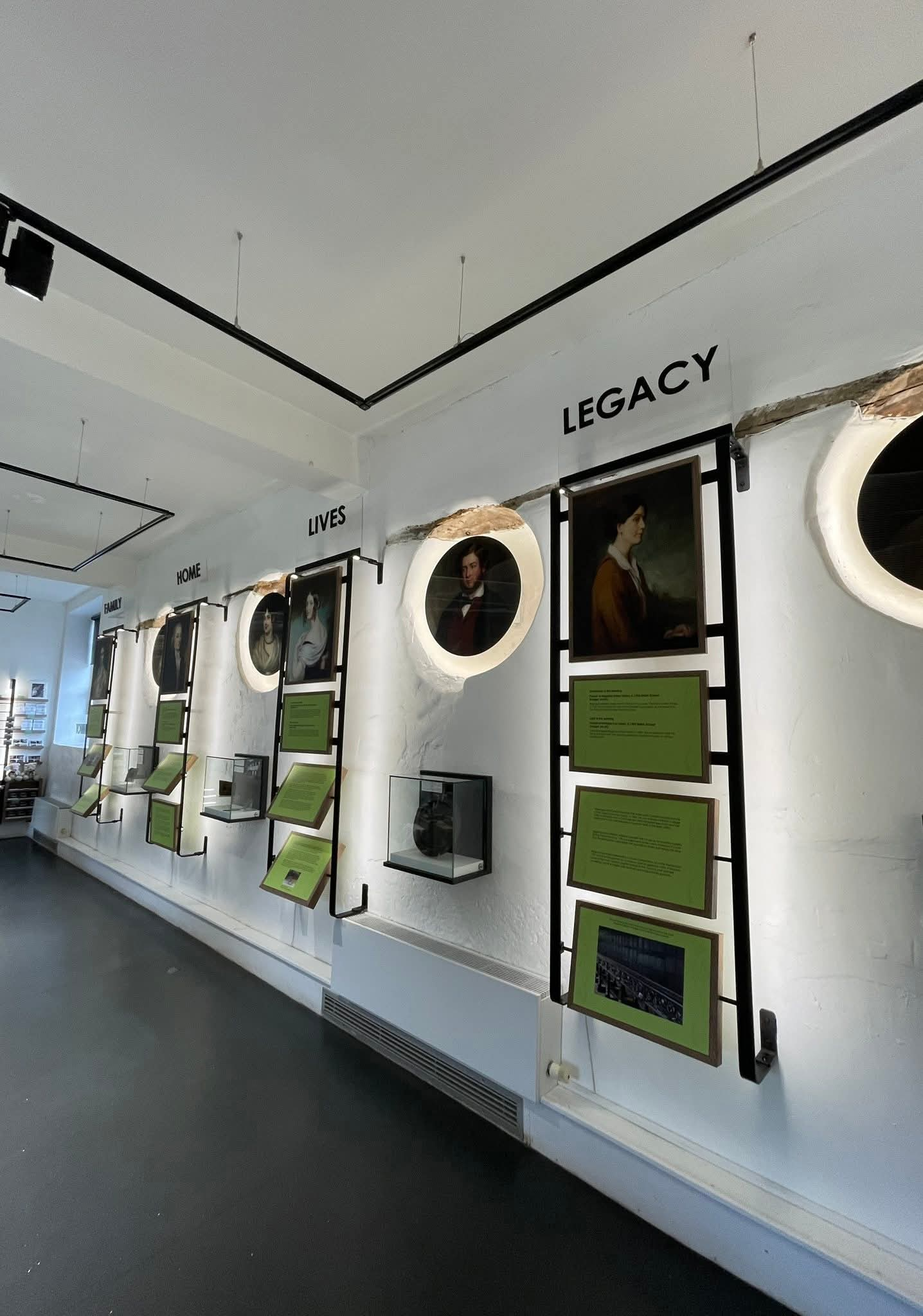
The Armitt, Cumbria
At The Armitt in Ambleside, Lumenata developed a flexible museum lighting scheme designed to accommodate changing exhibitions, artwork and display layouts. Carefully selected and positioned luminaires provide high-quality, controllable illumination while responding to the presentation and conservation requirements of sensitive objects and materials.
The adaptable system allows the museum team to adjust the lighting as exhibitions change, helping individual displays remain clear, engaging and appropriately illuminated. By combining flexibility, visual quality and careful control, the scheme supports an enjoyable visitor experience while complementing the character of this important cultural venue.


Lostock Academy, Lancashire
At Lostock Academy, energy efficiency was a key priority. Lumenata developed a cost-effective, low-energy lighting scheme designed to reduce energy consumption and long-term running costs while supporting visual comfort across teaching spaces, circulation areas and external zones. The project demonstrates how carefully selected lighting and controls can support the learning environment while responding to operational budgets and sustainability objectives.
Royal Preston Hospital, Lancashire
At Royal Preston Hospital’s A&E entrance, Lumenata created a welcoming and reassuring lighting scheme for the new canopy structure. The design enhances visibility, supports patient and visitor comfort and offers clear wayfinding at all hours. By balancing practicality with a calm, inviting aesthetic, the lighting plays a vital role in improving the first impression of this busy emergency care facility.

Every project demonstrates our commitment to delivering lighting that balances design quality, sustainability, and social impact.
Partner with Lumenata on Your Next Public Sector Project
If you are planning a public or community development, Lumenata can provide lighting design guidance and support from initial concept through to project delivery. Our collaborative approach develops efficient, practical lighting solutions around the project requirements and the needs of its users.
Get In Touch

"Light creates ambience and the feel of a place, as well as the expression of structure"
- Le Corbusier


Copyright 2026 Lumenata Design Services Limited. All rights reserved